Showing posts with label diamonds. Show all posts

Saturday, 18 June 2011

Diamond Shapes: Radiant Cut Diamond


Radiant Cut Diamond is a square or rectangular shape with clipped corners combining the elegance of the emerald shape and the brilliance and sparkle of the round shape. 

This square or rectangular cut combines the elegance of the emerald shape diamond with the brilliance of the round, and its 70 facets maximize the effect of its color refraction. Because of its design, this cut requires more weight to be directed toward the diamond's depth in order to maximize brilliance. Depth percentages of 70% to 78% are not uncommon.


Radiant-cut diamonds can vary in their degree of rectangularity. The length-to-width ratio will determine the diamond's outline, or what it will look like when viewed from the top. The ratio of the length to the width should be about 1.3 -1.5:1.

The first Radiant cut was designed by Henry Grossbard of the Radiant Cut Diamond Company (RCDC) in 1977. Prior to this invention, all diamonds with square or step-cut edges appeared less brilliant.

Grossbard invented a hybrid cutting style that revolutionised the industry's perceptions towards square or rectangular stones as he managed to create a step-cut diamond that possessed equal brilliance to triangular-faceted diamonds such as the oval and pear.

The Radiant is also the first cut to have a brilliant-facet pattern applied to both the crown & pavilion. RCDC launched the Original Radiant Cut diamond brand in 2002.

Because of its extra facets, the Radiant cut can disperse more light through the stone making it one of the most brilliant of all square- and rectangular-shaped stones. It also hides inclusions more efficiently than other shapes. As it is a hybrid cut combining the features of both brilliant and step-cuts, the Radiant is the ideal compromise and the perfect solution for someone who wants to “have it all.”

Radiant Cut Diamonds are principally used for important center stones primarily for rings but also for pendant.

You can either contact us on +60162211051 today or email us on kul.stones@gmail.com to arrange a consultation about your exquisite loose diamond.

Diamond Shapes: Cushion Cut Diamond


The Cushion Cut Diamond is a four sided deep square or rectangle cut with rounded edges and 58 brilliant facets - it has a cushioned shaped girdle. The cushion cut is an antique cut that most often resembles a cross between the Old Mine Cut (a deep cut with large facets that was common in the late 19th and the early 20th centuries) and a modern oval cut. This shape is also sometimes referred to as the pillow-cut or the candlelight diamond (a reference to cuts designed prior to electric lights, when diamonds sparkled in the light provided by candles).

The cushion, pillow or candlelight cut was developed in the 19th century and has undergone several transformations and developments since. The cushion cut has especially benefited from the invention of cleaving as this process has helped to maximise the shape’s light dispersion making it more dynamic and brilliant.

A cushion cut with a length to width ratio of less than or equal to 1.05:1 will appear square to the observer. While a squarer diamond is the preference of many, some people prefer a slightly rectangular-shaped cushion diamond with length to width ratios of 1.15:1 to 1.30:1.

Many cushion cut diamonds have a culet (small facet at the bottom of the pavilion) which can become a factor if it is visible to the eye. Where other pavilion facets reflect light back, the culet acts as a window through the diamond and thus shows the color of what ever is under the diamond. If there is white metal under the culet this window often appears as just another sparkle of light that is not be noticeable but the color of a finger might be seen, especially if the culet is big enough. A medium size culet is typically the point where a culet starts to be visible to the eye. Many medium culets are not visible to the eye but some are and most slightly large and bigger culets

The recent popularity for cushion cuts began some years ago, and the demand has increased as designers and antique dealers continue to use them. Cushion cut diamonds look especially nice in antique settings so are a great choice if that is the type of ring you are seeking.

You can either contact us on +60162211051 today or email us on kul.stones@gmail.com to arrange a consultation about your exquisite loose diamond.

Diamond Shapes: Trillion Cut Diamond


Triangular Brilliant, Trilliant, Trill and Trillion are generic terms referring to triangle cut diamonds. The trillion cut is an adaptation of the radiant cut but it is in a triangular shape. The trillion is a triangle that has equilateral sides and is a combination cut of the step cut and the brilliant cut diamond. Triangle diamonds may be cut with either straight sides or with sides bowed outwards, depending upon the nature of the rough.

The finished diamond contains 50 facets. An overall depth of 32 to 44 percent is most common in Trilliants. Ideally, a crown depth to pavilion depth ratio of approximately 1/3 to 2/3, as opposed to some of the foreign-cut Triangular Brilliants that can display 50/50 percent crown/pavilion proportions.

The trillion cut was first developed in Amsterdam, although the design varied dramatically depending on the rough form of the stone.

In 1962, the Henry Meyer Diamond Company of New York designed and trademarked the modern Trillion cut and over time the trillion became the generic name for all triangular brilliant cut diamonds.
Trillion cut diamonds make for striking accent or side stones, or offer a striking option for someone after a brilliant and unique solitaire.

Depth is an important factor to consider in Trillion cuts (especially where solitaires are concerned), as this can greatly affect the fire and brilliance of the stone. A well cut Trillion with great fire and brilliance can also hide inclusions fairly well.

You can either contact us on +60162211051 today or email us on kul.stones@gmail.com to arrange a consultation about your exquisite loose diamond.

Diamond Shapes: Asscher Cut Diamond

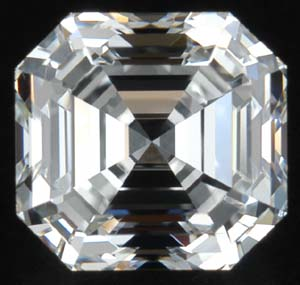
The " Asscher cut diamond" is a stepped square cut, often called the "square emerald cut" and like an emerald cut, the Asscher has cropped corners in order to strengthen the diamond.

Named after its creator Joseph Asscher, owner of the Amsterdam-based diamond company of the same name, the Asscher cut was developed in the early 20th century at the birth of the stylish and popular Art Deco movement. Joseph Asscher rose to fame several years later when he was commissioned by King Edward VII to cut the famous 3,106-carat Cullinan diamond for the English crown jewels. In 1980 Her Majesty Queen Juliana of Holland granted the Asscher Diamond Company a royal title in recognition of the role the Asscher family and company had held in the diamond industry. This cut’s popularity peaked in the late 1920s but remained a somewhat rare commodity for the remainder of the century, available only in antique shops and specialised Art Deco jewellers. At the onset of the new millennium, following considerable research and development, the Asscher cut was redesigned with new specifications and additional facets for a more brilliant shine, and has since regained its popularity.

Asschers typically have the following characteristics:
  • High crown
  • Small table
  • Deep and slightly bulging pavilion
  • Wide cut corners
  • Wide windmill reflection
  • House of mirrors (concentric square patterns)
The Royal Asscher Cut has a high crown and 74 facets – whereas the modern square-emerald cut, and the original Asscher both have 58 facets. Today the Asscher family name is often used as a commodity term for square-emerald cuts.  It is obvious why companies want to use the world-renowned Asscher name.

Very Square Asscher cuts (Ratio of 1:1) are preferred to even slightly more rectangular looking ones. Asscher cuts should not exceed a ratio of 1.1:1.

To fully appreciate the Asscher design, it is advisable to select a diamond of higher clarity (VS2 and above for GIA and VS1 and above for EGL, to ensure it is completely eye clean).

A table and depth percentage between 60 – 73.5% and 51 - 77% respectively is also recommended.

The Asscher cut is historically one of the less common diamond ring shapes, but it has increased in popularity in recent years. It is extremely rare for a larger diamond to be given an Asscher cut.

You can either contact us on +60162211051 today or email us on kul.stones@gmail.com to arrange a consultation about your exquisite loose diamond.


Diamond Shapes: Marquise Cut Diamond


The Marquise cut is boat shaped and is a variation of the round brilliant cut diamond. Marquise cuts are often chosen by woman who wish to display an independence of style. Also known as a “Navette cut” diamonds a Marquise shape diamond is the diamond that will stand out and be noticed.

The Marquise cut first appeared in Paris circa 1745 and its fascinating history can be traced back to the height of the French monarchy. King Louis XV commissioned his court jeweller to create a diamond that resembled the smile of his beautiful mistress, the Marchioness Madame de Pompadour. A well-educated and intellectual woman who exerted strong political opinions on the French court, Madame de Pompadour was the official maitresse en titre of King Louis XV between 1745 and 1750.

The shape was then developed and modified throughout the 20th century, evolving into the Marquise Brilliant cut as it is known today, seeing an especial rise in popularity between the 1960s and 1980s. The Marquise cut first appeared in Paris in approximately 1745. The fascinating history of the Marquise cut can be traced back to the height of the French monarchy reign.


Because Marquise shape diamonds are so regal looking and elongated in shape carat weight is maximised giving you the impression of a larger diamond. The length of the Marquise makes fingers appear long and slender and demands attention being a Brilliant cut diamond, full of fire and sparkle.

The marquise is usually cut as an adaptation of the 58 facet standard brilliant (33 crown, 25 pavilion), the same as the round brilliant. However, the pavilion can be cut with either 4, 6 or 8 pavilion main facets. The crown cut is sometimes modified in the marquise to form what is called a "French Tip," where the bezel facet at the point of the stone is eliminated.

A marquise cut with a length to width ratio of approximately 2:1 is the norm. For those who prefer a rounder look, choose a ratio closer to 1.5:1. For those who prefer a more elongated shape, look for a ratio of 2.25:1

In the marquise brilliant, as with pear shapes and other elongated fancy shapes, there is an increased likelihood of having a "bow tie." This is a dark area in the shape of a man's bow tie that occurs when the cut of facets reflecting light are not optimum. This facet misalignment can detract from the brilliance, especially if it is an exaggerated or overly dark bow tie effect.

It is important that the Marquise is not too shallow so as to avoid light passing through the back of the diamond and diminishing its brilliance and fire.

You can either contact us on +60162211051 today or email us on kul.stones@gmail.com to arrange a consultation about your exquisite loose diamond.
Diamond Shapes: Oval Cut Diamond


The oval cut diamond’s technique name is ‘oval modified brilliant’, based upon its shape and modifications of the traditional round brilliant configuration.

Although oval shaped diamonds were first introduced over 200 years ago, the modern oval cut was invented in the early 1960s by leading Russian cutter Lazare Kaplan. The cut eventually earned him a place in the Jewellers International Hall of Fame, however, Kaplan also left his mark on the diamond industry with his unique ability to split a rough diamond into smaller stones with a single blow. This process is known as cleaving.

The oval is seen most frequently cut in the standard 58 facet brilliant pattern, but can have a varying number of pavilion main facets ranging from 4, 6 or 8.

The length-to-width ratio will determine the diamond's outline, or what it will look like when viewed from the top. An oval cut with a length to width ratio of approximately 1.40 - 1.60 is the preference of most diamond buyers. For those who prefer a rounder look, choose a ratio closer to 1.15:1. For those who prefer a more elongated shape, look for a ratio of 1.70:1 .

When a rough material is poorly shaped or contains defective flaws that prevent it from being turned into a single stone, it must be split along the grain. Kaplan became famous for his expertise in taking stones that were otherwise deemed unworthy and transforming them into beautifully cut diamonds.

Ratio is an important aspect to consider with the oval shape as it can have a significant impact on both the light dispersion within the stone and the appearance of the finger. When selecting an oval shape it is important to reconcile the relative benefits of the longer shape (larger ratio) and the more rounded shape (smaller ratio). The former will better elongate the finger, while a more rounded shape will better prevent the bow-tie effect.

Like the pear shaped diamond, the oval cut can fall victim to the "bow-tie effect" -- an undesirable dark area near the center of the diamond. It's not unusual to see "some" bow-tie if you examine an oval-shaped diamond from various angles and in different lights, but what you don't want is an obvious black/dark spot that is dull from every angle and in all lights.

Oval diamonds give an even, perfectly symmetrical design popular among women with small hands or short fingers. Oval diamonds have an elongated shape which can make a woman's finger appear longer.

You can either contact us on +60162211051 today or email us on kul.stones@gmail.com to arrange a consultation about your exquisite loose diamond.

Diamond Shapes: Heart Cut Diamond


The technical name for Heart Cut Diamond Stone is the ‘Heart-Shaped Modified Brilliant’, based upon its shape and modifications of the traditional round brilliant configuration. Heart shaped diamonds are actually pear shaped diamonds with a distinctive cleft on top instead of the rounded edges. The heart shaped diamond can be quite fiery with excellent sparkle. The shape of the heart makes this diamond highly desirable for romantic occasions such as Valentine's Day and anniversaries. It is often referred to as one of the fancy cut diamonds and colored diamonds are often used for this special cut.

The exact origins of the heart brilliant are unknown although being a modified brilliant cut it may have appeared as early as the 16th century. However, gems which would today be classified as ‘triangular with rounded corners’ or ‘drops’ were at one time described as being heart-shaped. Indeed, this is evident from the many descriptions in French inventories dating from the middle of the seventeenth century. The first recorded heart shape diamond appears in a portrait entitled “The Gonzaga Princess,” painted circa 1605 by Frans Pourbus the younger. The large piece of jewellery on the princess’s left sleeve contains a variety of different cuts, some of which are thought to be versions of the heart-like ‘drops’ popular in France at the time. The heart shape is also mentioned in a book written in 1655 by Jean-Baptiste Tavernier, the French merchant-traveller who found his fortune in the precious stone trade and famously brought the Hope Diamond to France. In the text, he recalls seeing the “Heart Diamond,” a 36-carat heart-shaped brilliant in an ornament in the treasure of Aurangzeb, in India.

The most important elements to consider with the heart shape are the quality of the curved cut and finish as these determine the sparkle of the gem.

The heart shape is a brilliant cut which typically contains 59 facets but that can be modified so that the number of pavilion main facets may be 6, 7, or 8.

The length-to-width ratio will determine the diamond's outline, or what it will look like when viewed from the top. A heart-shaped stone is usually proportioned with equal length and width, approximating a ratio of 1:1. A length to width ratio of between 0.90:1 and 1.15:1 is preferred. The ratio should not fall below 0.80:1 or exceed 1.20:1 .

The shadow caused by the bow-tie effect can be reduced by altering the depth of the pavilion, and adjusting the angles of the table and facets to better diffuse light in the central area. This effect also occurs in the Pear, Marquise and Oval shapes.

Heart shaped diamonds are sometimes considered romantic, but they can be difficult to cut. The skill of the cutter greatly determines the beauty of heart shaped diamonds.

You can either contact us on +60162211051 today or email us on kul.stones@gmail.com to arrange a consultation about your exquisite loose diamond.